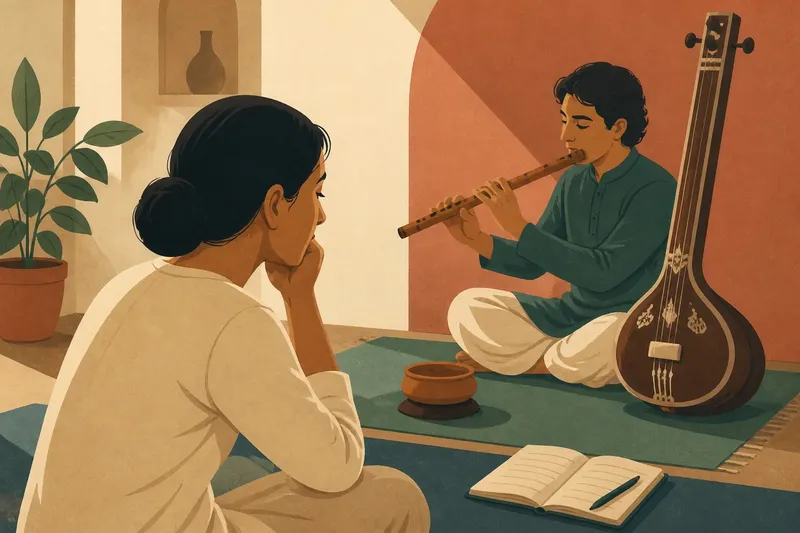
A Quiet Evening for Listening to One Instrument
A quiet evening for listening to one instrument gives you a simple way to hear changes in tone and role without turning music into homework.
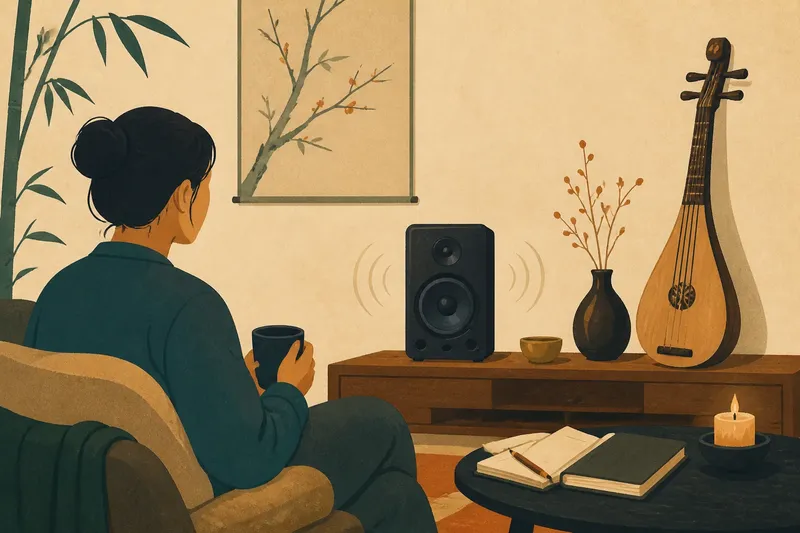
How do you listen closely to one instrument without turning an evening at home into homework? A quiet evening for listening to one instrument begins with a single recording, a comfortable place, and a choice about how much attention you want to give it. You can follow the sound with little preparation, or bring a small amount of context and a few notes into the room.
These approaches suit different moods. One leaves the music largely alone; another uses a brief listening prompt to make changes easier to notice. Neither asks you to identify every technique or know the instrument’s history. The point is to hear the same performance as a changing presence: perhaps a bright lead at one moment, a soft reply at another, or a sustained colour that seems to gather the other sounds around it.
Choose one recording
Pick a recording in which one instrument is easy to follow. It need not be alone. A bamboo flute may move above a soft accompaniment; a plucked zither may take turns with a singer; a bowed fiddle may shape the melody while percussion marks its movement. Choose a piece whose texture lets you keep returning to the sound you came to hear.
A recording you already like can make a good choice, but familiarity is not essential. A clear title and a brief description can help you understand what is present. Look for practical details such as the instrument’s name, whether the performance is solo or accompanied, and whether the recording includes spoken introductions. If a platform offers a short preview, use it to check that the sound and setting appeal to you, rather than to judge the whole piece.
For this kind of listening, one complete recording is usually more useful than a playlist. Switching between performances invites comparison before you have settled into either one. Treat the chosen piece like a lamp on a table: it gives the evening one point of focus, while the room around it can remain ordinary.
Three listening approaches
Unprompted listening
Settle in and let the piece unfold without taking notes or pausing to look anything up. Notice what draws your attention and when it changes. This suits an evening when you want music to remain restful, or when close analysis would make you self-conscious.
There is no need to make the instrument the only thing you hear. Let the accompanying sounds stay in view, but return gently to the chosen voice whenever your attention wanders. You may notice a shift in brightness, weight, pace or prominence without knowing the technical name for it.
Listening with a simple prompt
Choose one question before pressing play: where does the instrument become more prominent, or what changes when another sound enters? Listen without stopping. This modest direction suits someone who enjoys attentive listening but does not want a formal exercise.
Keep the prompt open rather than hunting for a particular answer. An instrument might become prominent by rising in volume, moving into a clearer register, changing articulation, or simply occupying a pause left by another sound. If the piece does not offer an obvious shift, that is also something you can notice.
Listening with a few notes
Keep paper or a notes app nearby and jot down a handful of plain observations: “soft, then sharp”, “answers the voice”, or “holds the final sound”. This suits a listener who likes to remember what happened and revisit the recording later. Avoid trying to transcribe every turn; brief descriptions leave room for the music itself.
Choose this option only if writing helps you attend. A notebook can become a barrier if you feel obliged to record every change. You can always put it aside and return to unprompted listening.
Prepare a calm room
Choose a place where you can sit comfortably through the recording. Set your phone to silent or leave it elsewhere, close unrelated tabs, and decide whether you prefer speakers or headphones. Speakers can make the performance feel shared with the room; headphones can make small changes easier to hear, though they may feel too enclosing for a relaxed evening.
Use a volume that feels comfortable rather than turning it up to catch detail. If the recording has a spoken introduction, you can leave it in or select the music directly, depending on whether that context interests you. Keep the setup simple: the listening should not depend on special equipment, a particular light, or a perfectly quiet household.
Say you have chosen a recording of a plucked string instrument with a singer. You might silence your phone, sit near a speaker, and decide to listen once without writing. If the instrument seems to recede beneath the voice and then return between phrases, you have already heard a change in its role; there is no need to interrupt the piece to name it.
Follow tone and role
Tone is the character of a sound: it may seem rounded, dry, ringing, breathy or grainy. Role is what the instrument appears to do in the music. It may carry a melody, support a voice, mark a pulse, answer another part, or provide a sustained background. These are listening descriptions, not boxes into which every performance must fit.
As the recording continues, ask how the sound changes. Does a note begin gently and then sharpen? Does a repeated figure grow more insistent, or does it soften into the surrounding texture? Does the instrument keep its earlier role, or take on another one? Changes can be subtle. A small alteration in attack or spacing may make the same phrase feel newly exposed.
Listen for relationships as well as isolated sounds. A pause may make a quiet instrument suddenly noticeable. A singer’s entrance can turn a previously prominent line into an accompaniment. Rather than treating this as a contest for loudness, hear how attention moves between parts.
Questions for the evening?
Do I need to know the instrument’s name?
No. A name can help you find further listening, but the first pass can rest on what you hear: its register, texture and apparent role. If you do look it up, do so after the piece so that searching does not divide your attention.
Should I listen more than once?
One complete listen is enough for a quiet evening. If you want another pass, let the first remain whole and choose a different focus for the next, such as how the instrument responds to a voice or changes near the ending.
What if I lose focus?
Return to the sound at the next phrase, pause or change in texture. There is no need to rewind or criticise yourself; attention wanders, and the recording continues to offer new points of entry.
Is a familiar recording a poor choice?
Not at all. Familiarity can make a small change stand out, while an unfamiliar piece can bring a fresh sense of discovery. Choose according to your mood, not a rule about what attentive listening should look like.
Make the choice simply
Choose unprompted listening when you want the evening to feel spacious. Choose a single prompt when you would like a thread to follow without taking notes. Choose a notebook when remembering specific changes is part of the pleasure. If you cannot decide, begin without a prompt: you can always listen again another day.
A quiet evening for listening to one instrument does not need a special conclusion or a polished account of what you heard. Once the recording ends, notice the last sound that remains in your mind: a breath before a phrase, the decay of a plucked note, or the way an instrument made room for another. That small residue can be enough to guide your next choice of listening.